Posted in Music chat

The Guvnor

It doesn’t really feel right to say, but Andrew Weatherall’s gone. Perhaps as we get older, we have to start getting used to this sort of thing. But I’m not sure I’m ready yet. It was only a week or two ago I was flicking through tracks and stopped on a whole folder of his stuff and went down another musical rabbit hole. He was down to play at a friend’s party in a few weeks. So none of today’s news seems to make much sense.

‘Iconic’ and ‘genius’ are thrown around liberally these days of course, but both words definitely fit this rockabilly kid from Berkshire that never sat still and never stopped making incredible music and playing it the best way imaginable. It’s also hard to think of a guy that’s not changed himself a lot, or sold out, nor stopped experimenting with interesting people because they’ve never got into a rut or satisfied with what they’re making. I don’t think anyone would have expected Weatherall to end up playing Creamfields, or Vegas, or headlining Lost Village. Because it wouldn’t have made sense. Why do that when you can create your own festival in a castle in France, or run your own night in distinctly not cool Elephant and Castle or a basement in Stoke Newington, or run your own studio so you can resolutely do it your way? Because that’s one thing he always did. Got too close to safe? Risk being confirmed as part of a scene? Go make something weird, throw them off the scent. And start afresh.

Yes, Prince and Bowie were absolute gods, and their influence so big that it seemed impossible they’d ever actually die. But they were of another world. You’d never bump into them in the street, or get to shake their hand at the end of a night. They existed mostly in older records, or hailed touring memories. Weatherall was tangible, he was here. He was around. You could see him play. You could see him often. You could go and say hi. You could listen to dozens of his mixes (or indeed, 900). Despite his fearsome appearance (back in the 90s/early 00s) he was a lovely guy, and back then i was one of many that doorstepped him – in this case in the back room at Turnmills at a friend’s techno night, Split – but I never knew anyone that had a bad word against him. He lived in east London still. He was part of the furniture. So it seems ridiculous that he’s not around, but that he was yesterday. He felt like he was one of us, really. And now he’s not.

I may be a little younger, but it’s hard not to see the impact from Screamadelica onwards on a skinny, clueless lad from Surrey, through a dance music epiphany, meandering through some questionable (but enjoyable) choices, to my middle age, and nodding with delight on the dancefloor at A Love From Outer Space, or catching him at one of the more interesting tents at a festival. That club night – so lovingly curated with Sean Johnston – reaffirmed and refreshed my dwindling attachment to clubs. I wasn’t fully retired, having spent the best part of my last two decades dancing, writing, playing records and hanging around the edges of London’s nightlife as a not-quite-proper member of the industry. But I happily assumed a slow cycle of diminishing returns, having good nights, but never really finding anything that was as good as it always was, because, well, that’s getting old isn’t it? It’s not a cliche to say that, but you never feel the same about something in your 40s as your 20s. And yet…. ALFOS was a revelation: musically perfect, reassuringly lacking in competitiveness, or black t-shirts,  or overpriced, over busy bars. It was, as Andrew often said “a good room, 2-300 people, a good sound system, some lights worked by someone that knows what they’re doing, and some good people”.  And it really did light something back up in me. And for that I’ll forever be grateful, and also forever sad, because I always felt there was another night to get down to, however more difficult it is living further from where’s familiar.

And going full circle, there he was, still ploughing his own furrow through these later years, just as vital as he ever was, yet more informed, more canny, more content, making interesting – and sometimes challenging – music, and talking about it in a way that was so much more vibrant than the majority of the industry, especially in an age of 280 characters, soundbites, insta-stories and paid-for content. Because Weatherall was much more than just a great DJ and selector: he was ridiculously well-read, a devourer of culture, and wanted anyone in his orbit to get some of the good stuff he was so enamoured with, and so committed to sharing. There was never any protectionism (ok, perhaps those white labels).

His skills and ability to hear music that was just off the middle lane, and seek out unusual musicians, producers and general creatives to not just work with, but feed off and listen to, was unrivalled. He made us take notice of people we’d never heard of: Timothy Fairplay, Nina Walsh, Keith Tenniswood, and so many more, who we of course became disciples of, like we did of him.  Whether hearing that fragment of a track that no one else did, and turning it into a ten-minute epic 4am chugger, or calving off into another collaboration with a new name to dive into discogs from. You always knew it was one of his, but yet nothing was ever quite nailed down.

He never seemed willing to rest on what he had, and that dry wit, and glint in the eye always made you think he was one step ahead. A man that was at the epicentre of so many of dance music’s eras, but that neither wanted its full glare (and when he got it, it burned him until he withdrew) nor was blinded by its reflection, always willing to state its fleeting resilience, knowing no one was ever really at the top for long and ensuring he was in the dark edges, where it was always more intriguing. As part of the mischief-making Boy’s Own crew, or later on in his own studio, a sort of king of Shoreditch, on his own terms, never really seen out with his crown. It just wouldn’t have been his style.

I only ever met him fleetingly, but he was a person you’d have happily wanted to spend a day with, asking him about everything he’d done, and the conversation never would’ve ended up where you’d expected. I was never a neck-deep fanboy (even he saw the funny side of that cadre, though), but perhaps I just wasn’t trying hard enough. But it was hard not to be mesmerised by what he did. And I’ve had only a handful of moments better than lost on the dancefloor hours into one of his mammoth sets. He was never boring to listen to, never a poster boy in the way his contemporaries were (or sought to be) and he always felt more content on the outside, just where he wanted to be. But more than anything, it felt like he was keeping us in suspense for the next stage of a career that had much more to give, and because he meant so much to many people. That’s why the gigantic hole he leaves will be so hard to fill, and why he’ll be so missed.
Posted in Album of the Month, Music chat, reissue

February (reissue) – NO OTHER by Gene Clark

Welcome to a new year and a new decade, brothers. After a month off and all of us caught up with last year’s excellent music, let’s start off with a look back – with the reissue of one of rock’s great lost albums.

“Underrated” is a word we’ve discussed before; it is, of course, too easily used and often described things that have not been that highly rated for a good reason. As a bit of a vinyl junkie, and an aficionado of all things 60s and 70s, many are the ‘underrated’ albums I’ve bought, only to find they languished in obscurity for a damn good reason.

So let’s start with a bit of background for Mr Clark. Founding member of The Byrds, he quickly became the band’s main songwriter, and wrote an astonishing number of their well-known songs (Eight Miles High, I’ll Feel A Whole Lot Better, Set You Free This Time). I hadn’t quite realised what a creative driving force he’d been in the band – especially when you consider this is a band with Roger McGuinn and David Crosby in it. The band used to call him the ‘Hillbilly Shakespeare’, because of his incredible talent for mystical lyrics despite his humble background.

However, he didn’t stay in the band beyond the third album, partly because of a chronic fear of flying, and partly because the rest of the band were pissed off that he earned more because of the songwriting royalties.

I really like the Byrds, always have, and as a Beatles nut, I’m hugely aware of their influence on the band – it was the Byrds jangling 12 string Rickenbacker that got Harrison to pick up one of his own and start adding it to the Beatles sound – which you can clearly here from Rubber Soul onwards. But I wouldn’t say I *listen* to the Byrds that much. Like The Beach Boys, I hugely admire what they did, but I don’t check in with them much.

Like a lot of the counter-cultural American rock artists of that era, Clark’s solo work after The Byrds showed him flirting quite heavily with country rock, particularly with his Dillard & Clark albums with bluegrass guitarist Doug Dillard. It’s pleasant enough stuff, but Gram Parsons, another Byrds alumni, was doing this stuff so much better.

All of this is a way of saying – Clark was obviously an insanely prodigious talent, but once he left The Byrds, there was no suggestion he was about to do anything that groundbreaking in his musical career.

It’s 1974. Clark has briefly rejoined a reformed Byrds, and the resulting album impresses mega-producer David Geffen enough to sign him to Asylum Records. This is the hippest, hottest label in the US at the time – home to Bob Dylan, Joni Mitchell and The Eagles. Geffen gives Clark a pretty whopping budget to go and make the album of his dreams….

What first hits you about the album is its ambition. Wikipedia helpfully describes this as “country rock, folk, gospel, soul and choral music with poetic, mystical lyrics”. It’s fucking extraordinary. Just listen to Strength of Strings alone. It’s a masterpiece:

(Eagle eared listeners of a certain age might recognised this as covered by This Mortal Coil on one of their albums. Perhaps it’s no coincidenc that it’s their label, 4AD, that put out this reissue.)

The other thing about No Other is that it also kind of sounds like everything – and then you remember that the ‘everything’ you’re thinking of came AFTER this record. Fleetwood Mac and Rumours in particular owe an enormous debt to the freewheeling genre-hopping of this album, as does some Dylan mid to late 70s output. As for the millennial era, this albums has clearly been a huge influence to a million bands, from Grizzly Bear (who’ve covered No Other songs live) to Arcade Fire to The National to every other flipping American indie band who’ve ever flirted with Americana.

So why is it so underrated? Why wasn’t it sitting next to Rumours in your parents’ record collection? Well, when Geffen heard what Clark delivered him, he lacked the vision to understand it. He thought it was a piece of shit, and berated Clark both privately and publicly, then spent nothing promoting it. That, along with frankly bizarre 1920s looking cover that gives no hint of what was inside, meant that Gene Clark’s incredible album bombed.

He never recovered from the devastating disappointment, and fell into the depressingly familiar cycle of drugs and addiction, and though he staggered on through the 80s, he never made an album of this stature again. Addiction eventually took his life aged only 46, in 1991.

What he has left is an album that can genuinely stand shoulder to shoulder to much of the greatest rock music of the era. And you can hear in that plaintive voice that he is delivering the album of his life. It is a tragedy too often told in the music industry that an artist has die before their work is appreciated. It’s never truer than with Gene Clark and No Other. Let’s at least be grateful that the ‘Hillbilly Shakespeare’ got to make his masterpiece.

Posted in Music chat, New Tunes

ALBUMS OF 2019

Posted in Album of the Month, New Tunes

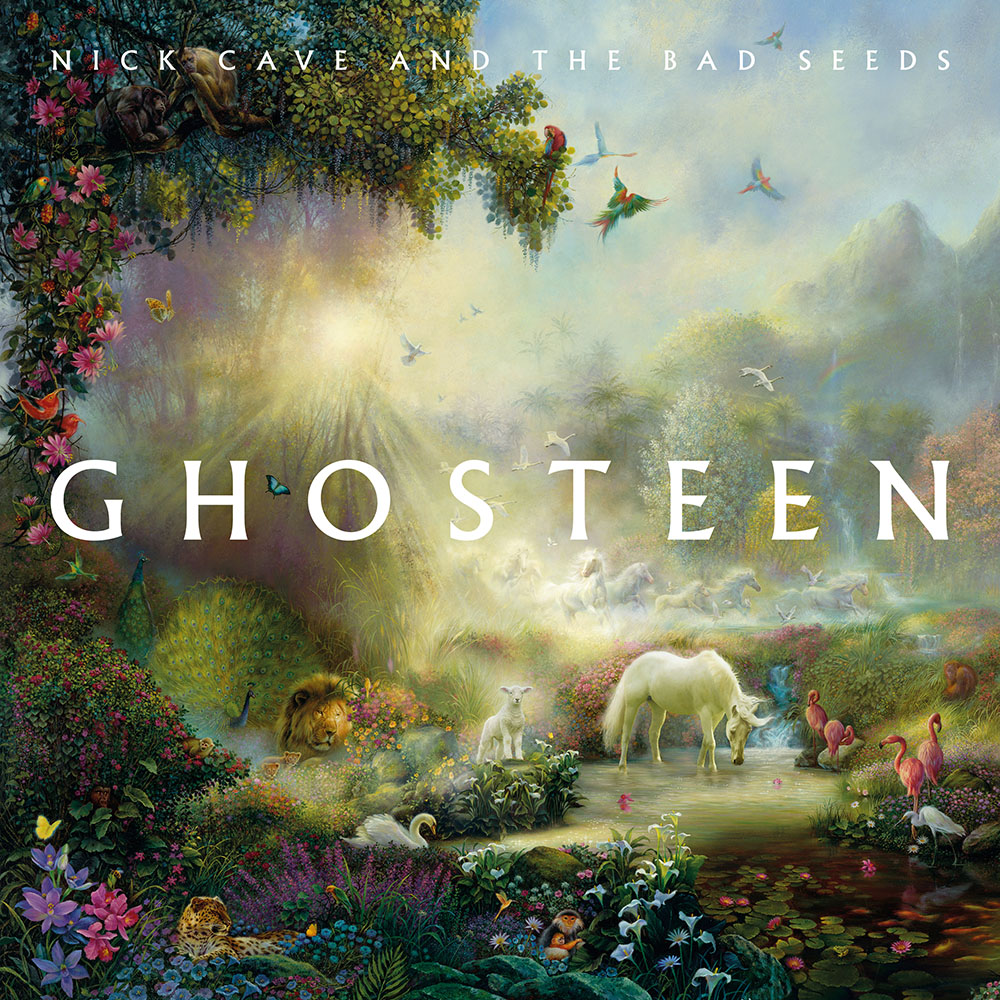
December AOTM: Ghosteen – Nick Cave and the Bad Seeds

Image result for ghosteen

I genuinely don’t really know where to start with this one. First, I guess I should start with an apology. I know what it feels like to have an AOTM chosen that you know will be an effort for you. David, I am sorry. However, I have not chosen this because I am a huge Nick Cave fan. I have a passing knowledge of his music acquired some from of my previous (intense but failed) relationships. I have only ever bought one other Nick Cave album, Dig, Lazarus Dig from 2008. Bought on the strength of reviews, loved at the time but rarely played since.

What I do love about Nick Cave is his undeniably prolific creative output. I think this is his 17th studio album with Bad Seeds, add to that Grinderman and other side projects, soundtracks, screen plays, acting roles, exhibitions etc. This can be seen as self indulgent or it can be viewed more favourably as an endless stream of creativity. A stream that stopped a couple of years ago.

I don’t read too much music press if I am honest. I didn’t know about the loss of his teenage Son Arthur until the release of Ghosteen. I approached the album with some trepidation. I didn’t know what to expect and listened mostly without reading reviews in any detail. When you listen you are going to have to make a decision to give this a go or not. I hope you go with it. What you will find is a double album (double sorry David). The 2nd album contains two 12 minute songs (triple sorry David). As AOTM ‘asks’ go, this is a big one.

What first struck me is the ‘soundscape’. I never know if ‘soundscape’ is the right word. If it were a film it would be the ‘mise en scene’ so what ever the music equivalent of that is, that’s what I mean. Rich textured, chesty, vibrating analogue synths, strings, choral, gospel tinged backing vocals, piano’s and that voice. No matter what you think of Nick Cave, his voice is fucking incredible. It feels like his career to date, he’s been practicing to sing these lyrics and these songs. The first CD/side of the album is formed of 3-6 minute, beautiful and relatively conventional tracks. The 2nd and 3rd tracks, ‘Bright Horses’ and ‘Waiting for You’ are undeniably beautiful ballads. I think they will act as ‘anchor’ tracks that you will find yourself falling for on repeated listens. They are the most conventional and identifiable tracks and feature some achingly beautiful lyrics.

‘He’s the little white shape dancing at the end of the hall / the wish that time couldn’t dissolve’

And for me, this line, is a beautiful example of what I love about this album. ‘Arthur’ is never named. The word ‘death’ never appears. Neither does ‘grief’. Nor ‘loss’. There is close to no use of the past tense. The album revolves around the positivity and hope of the present and future tenses.

This album is not about loss. It is about permanence.

It is about the power of love and of memory. It makes me feel that there can be beauty found in the deepest tragedy which somehow makes me feel more connected with the things that I love the most.

Before Sammy was born we called him ‘Wolfgang’ it stuck so much we considered it for real. It feels like ‘Ghosteen’ is used in a similar manner by the Cave family on the other side of the life continuum. ‘There is nothing wrong with loving something that you can’t hold in your hand’

Back to the ‘ask’ – David, CD 2 will be a challenge for you. I’ll just call that now. I do urge you to give it a go though. I have these tracks play continuously CD1 and CD2 without interruption and feel this is the best experience. Nick Cave talks about the CD2’s tracks being the ‘parent’ tracks, they were written first and spawned the ‘children’, the tracks found on CD1. This only really makes sense when you become deeply familiar with the music. I hope this is somewhere that you get with this beautiful music.

‘I am beside you, look for me’