Welcome to Episode 65 of This Is Not Happening. An Album of the Month podcast. In Part 1, we review our Album of the Month. This month Nolan brings a big chunk of country (or is Heartland Rock?) with Zach Bryan's latest release 'With Heaven On Top'.In Part 2, we play Spin It or Bin It, we pick a theme and all pick songs that represent that theme. This month the theme is 'New Music', tracks released since January 1st.__________Part 1 | Album of the Month | Zach Bryan | With Heave On Top ____________Zach Bryan is a relatively divisive, country artist who is HUGE in the states but can his latest album help him become (even more of) a global superstar? At 25 tracks and 1hr 18 mins he's giving the album every chance of making an impact.This album has genuine, authentic heart. It's length is a big talking point, so is it's genre, is it country? Americana? Something else?Listen to the original album here.Listen to the acoustic version released 3 days after the original here.Watch an interesting conversation with Bryan and Springsteen here. ___________________Part 2 | Spin It or Bin It | New Music _____________________Every 3 months we pick the theme 'New Music' and each pick 4 tracks that have been released in the last 2 month. Listen to our 16 track play list that we created for the New Music theme.We then each pick select 1 track and ask the simple question 'Spin It Or Bin It'?Joey chose 'Aperture' by Harry Styles.David chose 'Miami' by Pigeon.Nolan chose 'Milk, Blue' by Pem.Guy chose 'Out of Phase' by Alexis Taylor and Lola KirkeWe've been writing the blog for years come and have a look – https://thisisnothappening.net/
Welcome to Episode 64 of This Is Not Happening. An Album of the Month podcast.
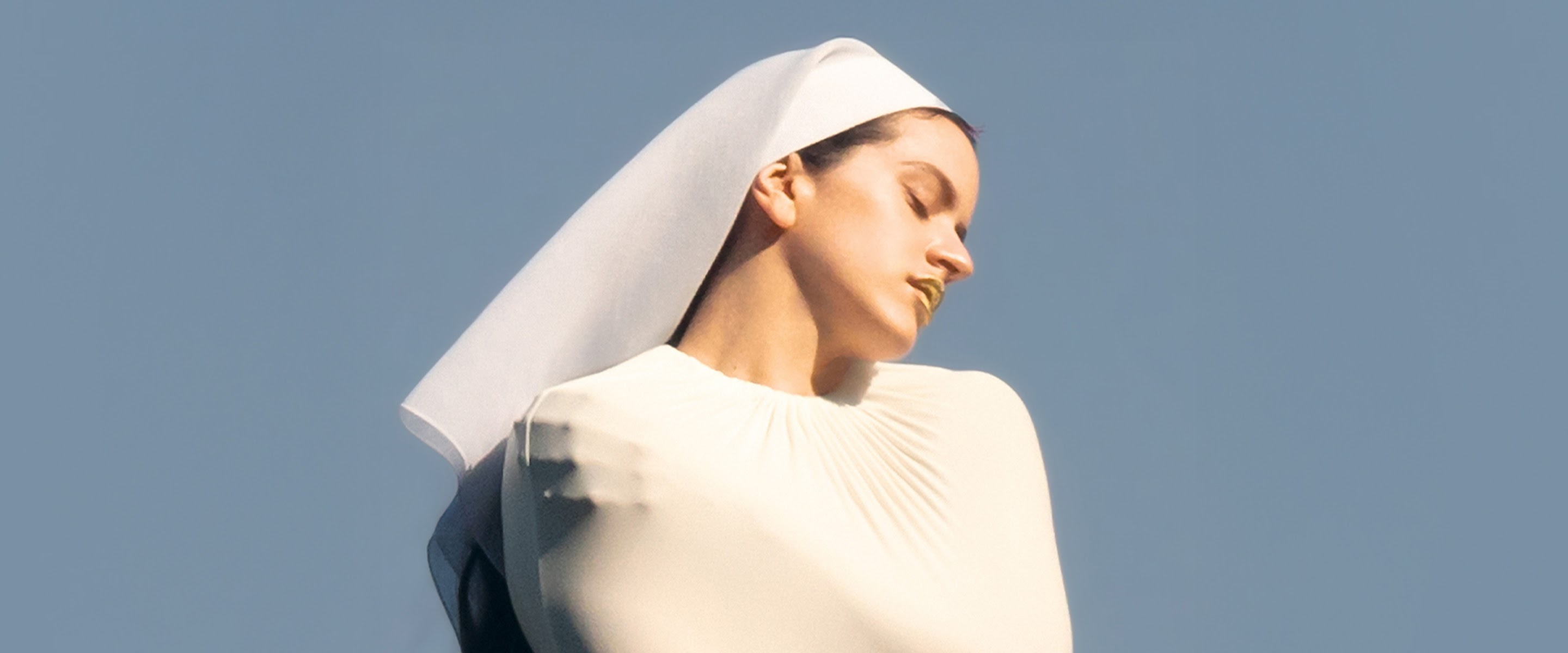
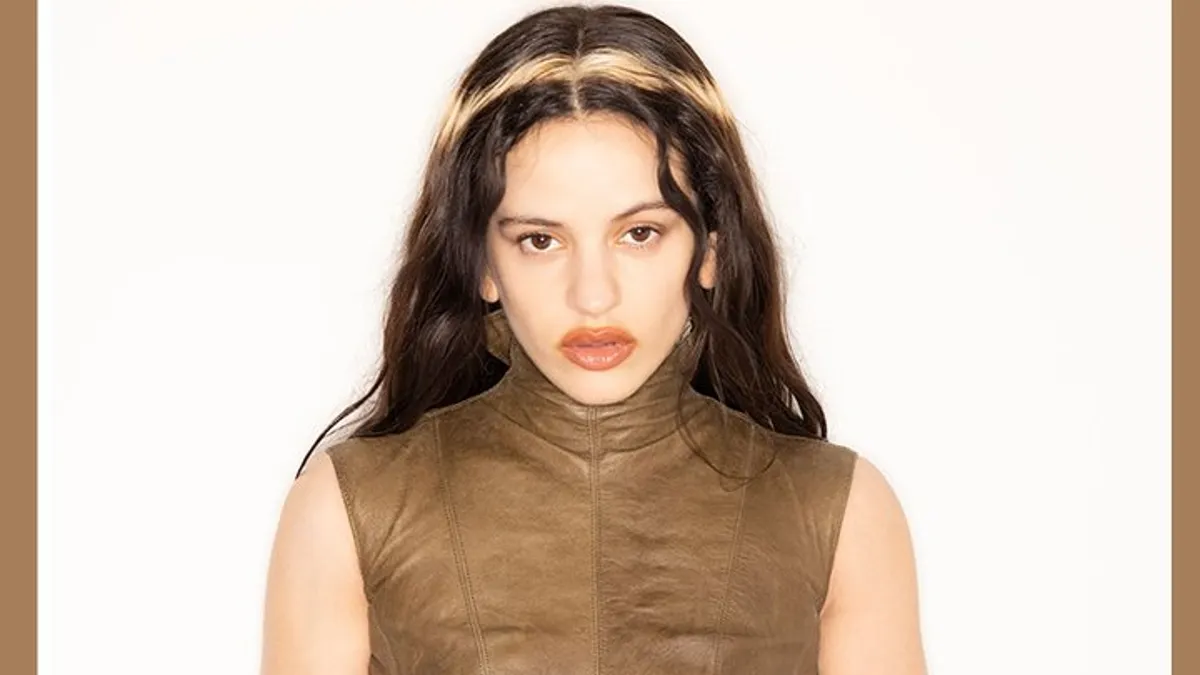
In Part 1, we review and Album of the Month. This month Joey brings perhaps the most critically acclaimed album of 2025, Rosalia’s ‘LUX’.
In Part 2, we play Spin It or Bin It, we pick a theme and all pick songs that represent that theme. As it’s January and everybody is back in the gym or re-starting running program’s we’ve picked ‘songs to get injured to’.
_______________________Part 1 | Album of the Month | Rosalia | LUX________________________
This is a big one. Big in many ways. Massively popular, globally. But more importantly MASSIVE in scope, scale and ambition. Rosalia’s 4th album takes a major turn from the reggaeton, digital urgency of Motomami. This a symphonic, spiritual, complex and challenging collection of songs presented in 4 movements (if you’re on vinyl). It requires you to focus, engage and consume with purpose.
It’s undeniable that it is ambitious, its brilliance is clear … but will any of us actually like it? Does it make you want to listen to it? Are you drawn to come back to it?
Check out the Zane Lowe interview with Rosalia here.
___________________Part 2 | Spin It or Bin It | Songs To Get Injured To _____________________
New Year New Me. The gyms are packed. People are begging to get injured. What should you chose as your soundtrack to that achilles rupture or that rotator cuff tear? The answer is probably in this 16 track play list that we created.
We each pick 4 tracks for the playlist and submit 1 track and ask the simple question ‘Spin It Or Bin It’?
I nearly chose Rosalia’s Motomami as album of the month back in 2022. I think I correctly determined that the rest of the pod would hate it. It was chaotic, digital, and brilliantly abrasive. But it also leant very heavily into Reggaeton that I knew would wind at least 2 of the brothers up. That album won 4 Latin Grammy awards as well as the Grammy for best Latin Alternative album. Where do you go after that?
Apparently, you go towards the light (‘Lux’ is latin for light and clearly references luxury too).
This month’s choice is LUX, the fourth studio album from Rosalia, and it’s a lot. If MOTOMAMI was an album following an adrenaline-fueled night out in a neon-drenched city, LUX is the spiritual, orchestral comedown at dawn. It’s a MASSIVE, operatic, orchestral, experimental, entrancing, exciting, overwhelming experience, presented in 4 movements like a classical symphony.
Concepts and Themes.
At its core, LUX is a deep dive into the history of female mysticism. Rosalía has traded the streetwear imagery of Motomami for the iconography of female saints and spiritual pioneers. The album explores the idea of transformation she uses the stories of medieval mystics and uses these historical figures as mirrors for her own experience with fame and womanhood. This record is obsessed with transcendence, reaching for a state of peace or grace beyond the noise of the modern world.
Architecture of Lux’s Sound.
Rosalía is firmly in the driver’s seat as executive producer (handling ‘97%’ of the production herself … not sure how you determine a single % of production input but I’m here all day for random stats). However, the sonic world of LUX was built alongside a carefully selected team of collaborators.
Noah Goldstein: Rosalía’s long-term collaborator and the man who helped engineer the maximalist textures of Kanye West’s My Beautiful Dark Twisted Fantasy and the sparse brilliance of Frank Ocean’s Blonde. He knows exactly how to handle her more experimental impulses, having been a key architect on MOTOMAMI and Travis Scott’s Utopia.
Dylan Wiggins: Bringing the rich, multi-instrumental depth that anchors the album’s four movements. You’ve heard his touch on SZA’s SOS, The Weeknd’s Starboy, and Daniel Caesar’s Never Enough. He provides the soulful, organic counterpoint to the album’s grander symphonic moments.
David Rodríguez: Her right-hand man for vocal production. He’s the reason every one of those 13 languages she sings in hits with total precision. Beyond his work on the MOTOMAMI era, David (often known as Godriguez) has a deep history in global sounds, famously producing Sampa the Great’s breakthrough The Great Mixtape.
It’s also worth noting the absence of El Guincho, Rosalia’s long time creative partner, which reminds me of Little Simz’ recent creative journey? Notable is the inclusion of Caroline Shaw (the Pulitzer-winning composer who has worked with everyone from Kanye to the Attacca Quartet) and conductor Daníel Bjarnason. These are two heavyweight collaborators that represent and add to the scale of this work.
First Impressions.
I’ve only been living with this for a few weeks and my notes are a bit of a mess. I am finsding that I don’t often have the words to describe what I am hearing or feeling.
“Porcelana”: Inspired by the Japanese monk Ryōnen Gensō, who famously scarred her own face to pursue her spiritual path. It’s a haunting track where Rosalía sings partly in Japanese over a backdrop of Bernard Herrmann-esque string stabs and heavy flamenco claps.
“La Perla”: This one is going to spark a lot of debate on the pod. Musically, it’s a light, airy waltz with a dramatic swell of brass—but the lyrics are an absolute evisceration of a “world-class fuck up” ex-lover. It’s “the anti-ballad,” hiding venom inside a gorgeous, shimmering shell.
“La Yugular”: Drawing on the Sufi mysticism of Rabia Al-Adawiyya, this track explores the proximity of the divine. It features a surreal nesting-doll lyric about an army fitting in a golf ball, ending with a spoken-word fragment from Patti Smith.
“Berghain”: (Featuring Björk and Yves Tumor) is a total head-fuck in the best way possible—a club track that feels like it’s being performed in a cathedral.
The Anti-Dopamine Manifesto.
Crucially, Rosalía has been very vocal about how she wants us to consume this record. In a direct response to the “commoditisation of the hook”—where 15-second snippets are engineered specifically for social media virality — she has described LUX as an anti-dopamine hit.
She isn’t interested in making background music for your morning commute or soundtracking a scroll through your feed. Her advice? Sit in a darkened room with the lyrics and their translations in front of you. This is not “easy listening,” and it wasn’t intended to be. It’s an album that demands total, undistracted attention. It’s a challenge to the modern listener to slow down and sit with the discomfort of silence and the weight of an orchestra.
Whether she’s successfully fought back against the TikTok-ification of music or simply created something beautifully inaccessible is exactly what we’re going to get into in the podcast.

 thisisnothappening.net