This month we’re all picking our favourite Hip Hop album to celebrate the genre’s 50th Birthday. We’re NOT picking ‘the best’ or ‘the most hipster’ or the ‘one with the most singles on it’ etc etc. It has to be personal, it has to be ‘our’ and it has to be ‘favourite’. For me, there is not too much debate on my choice. Well, ok, there was a little debate. I too, like David struggled with a Public Enemy album but mine would be Apocalypse ’91 which is almost nobody else’s favourite PE album. But being true, I had to pick Buhloone Mind State.
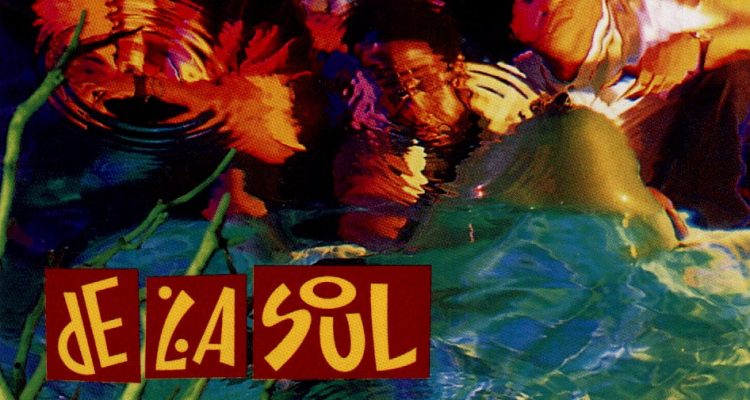
I bought this, on CD from John Menzies in Aldridge in 1993. I guess that means I was 16 and I guess that means that due to the release date I had just started my A levels. I had barely listened to De La Soul for 5 years. I wasn’t a huge 3 Feet High and Rising fan. It has a place in my heart and in my history but SOOOOOO many skits. Obviously it had a HUGE impact on music, on Hip Hop and on culture in general. It was important. I was mostly listening to Sonic Youth and the Pixies at this stage. I was starting to explore electronica. But something made me buy this album and it has been with me ever since. I wish I could chart the consistency of which I play this album cause I think it would be a surprisingly frequent and regular listen over the past 30 years. Albums have memories attached to them, my memories attached to this album span 30 years!
So what is it? It’s De La Soul’s 3rd album. And its a ‘proper’ album. Its a coherent body of work with productions credits going to Prince Paul and perhaps his best work? (Handsome Boy Modelling School?). The album has recurring musical, lyrical and emotional themes. It’s an exploration of Hip Hop, of music, of De La Soul’s treatment by the music industry. It’s about 3 musician’s growing up.
At first it can sound like a bag of ideas, not all of which are expressed fully formed but in my mind all of the ideas on this album are fully explored, they are just not explored within the confines of one track. Motifs are introduced on one track, carried through to another and finally resolved in yet another. The tracks on this album could only ever appear in the order that they do. There is no debate. Sorry. If you listen to this on shuffle, we need to speak.
It’s got just about everything you could want from any album. It’s introspective (without that introspection every wandering up it’s own arse), it’s genuinely innovative, it’s funny, it’s heart breaking, it’s educational, it’s 48 mins but feels much less. It’s a joy.
It’s also pretty dark in places. A repeated notion is the their frustration with constantly being asked to ‘cross over’. ‘Why are N***** always crossing over something huh? I mean what’s the matter huh? They can accept our music as long as they can’t see our faces’. This theme appears through out the album and is a clear reference to the expectations of the industry following the success of 3 Feet and then the critical reception to De La Soul is Dead.
Let’s also hear it for Maceo Parker ‘who be blowin’ the soul out of this horn’.
David has asked if ‘I am I be’ is the best Hip Hop album track of all time. I ask, is it the best Hip Hop track of all time? It is the beautiful, perfect resolution to many of the motifs explored on the album, they all point to this piece of Hip Hop perfection. If you ever find yourself in an argument with a mouth breather about the importance of Hip Hop as a credible art form, just ask them to sit down and listen to this. You might want to share the Posdnous’s first verse lyrics and ask them to reconsider their opinion;
I am Posdnous
I be the new generation of slaves
Here to make papes to buy a record exec rakes
The pile of revenue I create
But I guess I don’t get a cut cuz my rent’s a month late
Product of a North Carolina cat
Who scratched the back of a pretty woman named Hattie
Who departed life just a little too soon
And didn’t see me grab the Plug Tune fame
As we go a little somethin’ like this
Look ma, no protection
Now I got a daughter named Ayana Monet
And I can play the cowboy to rustle in the dough
So the scenery is healthy where her eyes lay
I am an early bird but the feathers are black
So the apples that I catch are usually all worms
But it’s a must to decipher one’s queen
From a worm who plays groupie and spread around the bad germ
I cherish the twilight
I maximize, my soul is the right size
I watch for the power to run out on the moon
(And that’ll be sometime soon)
Faker than a fist of kids
Speakin’ that they’re black
When they’re just niggas trying to be Greek
Or some tongues who lied
And said “We’ll be natives to the end”
Nowadays we don’t even speak
I guess we got our own life to live
Or is it because we want our own kingdom to rule?
Every now and then I step to the now
For now I see back then I might have acted like a fool
Now I won’t apologize for it
This is not a bunch of Brady’s
But a bunch of black man’s pride
Yet I can safely say
I’ve never played a sister by touching where her private parts reside
I’ve always walked the right side of the road
If I wasn’t making song I wouldn’t be a thug selling drugs
But a man with a plan
And if I was a rug cleaner
Betcha Pos’d have the cleanest rugs I am
 thisisnothappening.net