Welcome to Episode 73 of This Is Not Happening, an Album of the Month podcast. In Part 1, we do a deep drive review of our Album of the Month. This month Nolan has chosen an producer and artist that was on none of our radars, Dahi. He's the producer behind many massive artists including Kendrick Lamar and has released his first 'solo' album Black Boy (Alternative).In Part 2, we play Spin It or Bin It, we pick a theme and all pick songs that represent that theme. This month, taking inspiration from last months focus on Phoebe Bridgers, we are picking tracks by 'SuperGroups'.Part 1 | Album of the Month | Dahi | Black Boy (Alternative):He may not be the first SuperProducer that you might think of but its hard to deny that Dahi meets the definition. He's produced for Kendrick, SZA, Travis Scott, Mac Miller, Childish Gambino, Madonna and Dr. Dre. But now he becomes the creative focal point with his debut artist release. The album is many things but it's nothing like I expected it to be. Dahi himself described the solo project as 'African Radiohead' which I feel is weird and misplaced but apparently the internet has much to say on the topic.Join us as we unpack this interesting and intriguing album.Read the Guardian's review for a bit of background here.Read this rare interview on Music Tech to learn more from Dahi.If you'd prefer to watch an interview … Saving Connie has it covered.This playlist reminds you how prolific Dahi is.Part 2 | Spin It or Bin It | SuperGroupsThe theme this month, inspired by Phoebe Bridgers Boy Genius side project is the Super Group. We are defining SuperGroup as a collection of previously well known solo musicians or members of other groups who form a named, side project with other solo musicians or band members.The task is pick a track that fits the theme, the objective, get more 'spins' than your friends. We each pick four tracks for a 16 track play list . We then each pick select 1 track and ask the simple question 'Spin It Or Bin It'?Guy chose | Getting Away With It | ElectronicJoey chose | 'The Truth' | Handsome Boy Modelling SchoolDavid chose | 7/4 Shoreline | Broken Social SceneNolan chose | Definition | Black StarWe've been writing the blog for years come and have a look – https://thisisnothappening.net/
Welcome to Episode 72 of This Is Not Happening, an Album of the Month podcast.
In Part 1, we do a deep drive review of our Album of the Month. This month Guy has chosen an album that feels inevitable, Phoebe Bridgers much anticipated and long awaited ‘Lost Weekend’
In Part 2, we play Spin It or Bin It, we pick a theme and all pick songs that represent that theme. This month, taking inspiration from Phoebe our theme is ‘Miserable Music’. Tracks that make Phoebe Bridgers sound uplifting.
Part 1 | Album of the Month | Phoebe Bridgers | Lost Weekend.
Phoebe Bridgers is one of the biggest artists outside of mainstream pop but this is only her 3rd album in 8 years. She doesn’t lack for creative output or activity but still, her albums are a rare, anticipated thing. The critical response has been mostly positive but there are some naysayers dispite its current 91 score on Metacritic. But what will we make of it? The four of us have varying degrees of fondness for her music but again mostly positive. Jump on the socials and tell us what you think?
The theme this month, inspired by Phoebe’s melancholic machinations is ‘Miserable Music’. Feels like a slam dunk for Joey but what will the brothers bring?
The task is pick a track that fits the theme, the objective, get more ‘spins’ than your friends. We each pick four tracks for a 16 track play list . We then each pick select 1 track and ask the simple question ‘Spin It Or Bin It’?
I was all ready to dive into one of the biggest albums of the year, Charli XcX’s Music, Fashion, Film in September’s podcast, but it turns out it wasn’t the only huge album out this summer by a female artist with obsessive fans and a lore to back it up. Phoebe Bridgers may be a very different artist, but her new album – Lost Weekend – comes with all the attention of XcX’s and even loftier ratings (currently listed as the highest ranked album on metacritic of 2026, clocking in at 91 on its release day). And while we’d have had a lot to say about the former, it feels like everything that could’ve been written about Music, Fashion, Film may already have been done in the month since it was released. Bridgers’ new album is barely a week old.
Charli’s record has rightly generated a monstrous amount of attention in the last few months, with its pivot to fuzzy guitars and meta musings on where you go as an artist after an album as mega as Brat in 2024. But for Bridgers, whose last album, the Covid-era Punisher took her from indie darling to global star in a time when she didn’t even leave her home, the gap between solo records has been much longer, and with it, ever-growing great expectations. Bridgers hasn’t spent the time idly; finally touring that record took up a significant chunk of time, after which she teamed up with Lucy Dacus and Julien Baker as Boygenius, whose album the record was a huge pod highlight in 2023 and into 2024 as the trio toured, and the time I was first fully attuned to Bridgers as an artist.
Full disclosure: I am no Bridgers completeist, though I’ve listened to her earlier work since then. I’m aware that there’s a significant and dedicated fanbase and lore to accompany her career, but I’m both too late to the party and way too old to be likely to align with them. So playing catchup, I’m finding myself getting knee-deep into her music now, while also feeling the weight of that dedication and history too, such has been the discourse around her ever since her breakout record. I’ll reference what I find, but more than aware I’ll get things wrong or miss them out. Her life as a tabloid subject also looms around this record – her much-reported relationship with Paul Mescal, the fallout from it and subsequent one with Bo Burnham – as inevitable context for its subject matter, but the themes are far more universal than just her own life. And don’t the best artists take their own experience and find a way to make it connect with every listener?
So, to my growing love for Phoebe: I adored boygenius, my gateway drug to Bridgers. It was a slow burner through 2023 and into 2024, brought to my attention by Nolan. I had been aware of her in the music world before then, as much on Twitter (ok, X, RIP good Twitter) where she was pretty outspoken at the time. There was something interesting about an artist who lived very much in the eye of their fans and the public. But for me this started with the trio of Bridgers, Lucy Dacus and Julien Baker. The album came at a time when I was starting to find my way with artists that were ‘country adjacent’ (nodded to in Spin It from Episode 45. It seemed to hit this sweet spot of country, rock, americana and Appalachian music, with guitars and banjos, ballads and storming throwdowns, and the joy of an all-female group doing it their way has really stuck with me. It has stayed with me ever since. That ‘conversion’ probably goes all the way back to Kevin Morby’s Oh My God (chosen as AOTM by Joey, interestingly, the month before we did our first podcast episode in July 2019) where the seeds were sown, even if that’s only a little bit country. It’s also the year that Joey and Nolan picked Punisher in their top 10 albums so it’s good to have early adopters around for the discussion too. I feel I’m always late to the dance! I took in Hurray For The Riff Raff, Waxahatchee and Big Thief in 2022, and by 2025, after boygenius took my heart, I was even nominating Lucy Dacus as my own album of the month, with Forever Is A Feeling. I guess what I’m saying is that while I am never going to be moving to Nashville, there’s a chunk of the ‘country venn diagram’ that I’d never have got near without this beautiful place, and that’s why I love the country/folk nexus that’s opened me up to so many great artists. So really it’s not a big surprise why I’ve chosen this album.
I knew the hype was huge, but I didn’t have much expectation given my lack of exposure to her solo work. When I’d heard Lost Boys as the lead single, popping up in the algorithm, I thought: “bloody hell, if the album is as good as this, I may have found myself a new musical infatuation.” It rocked, Bridger’s voice feeling more gutsy than my previous experience, the ‘boys’ a cipher in a broadside to toxic masculinity that calls out the bubbles that communities exist in. It sounds big, vital and an intended statement that pushes back on the reductive ‘sad girl music’ label she’s so often tagged with. Even without much background to her, I’ve never seen her music as that specific. It’s far more amorphous and interesting than this. I can see why the label persisted, but the more I’ve read and listened, it feels like Bridgers’ world is so much bigger than that: mortality, love, loss, family, grief, compassion and also fun. And there’s a lot of that on this record to me.
What I got when the album dropped surprised me. I am not sure many were expecting the electronic fingerprints all over the opening track, The Outside. Heavily vocoded/autotuned, into a disembodied chorus of Bridgers, it opined “crying in a suit and tie / but you should see the other guy”. The effects were such that you’d have barely known it was Bridgers at all. It pointed to a wider sonic palette, and perhaps a sign that this wasn’t going to be Punisher 2, whether that pleased fans or not. Straight away, we were into familiar lyrical territory, with Bridgers’ father and her fractured relationship, only this time he’s no longer here. There’s the gallows humour of his funeral, the layers of grief that envelop not just your searing loss for someone but also the complexities of their behaviour and its effect on you. It’s these moments that seem to land hardest, where Bridgers mines her own life to weave a rich narrative about the lack of binary emotions. Life, love and loss is complex, and music is never better than when it’s painted in shades.
The album is long, by relative standards of indie/folk. At 16 tracks and 52 minutes, there will inevitably be moments of different energy, pace and feeling. Some of these may be felt to be surplus to requirements, but none feel that way to me right now. The glare of a new album, a new artist, often means – to me at least – that properly wrapping yourself in an album by an artist at the top of their game means remembering some objectivity as you try and view the whole and its parts. For me, the more I’ve listened to it, the more it’s made sense: for all the big sound of Bobby – an obvious paean to Burnham and the glow of new love that feels so bright it’s unsettling – and Haunted and Never Going Back’s rootsy energy, tracks that will surely sound good in stadia around the world, it’s the dynamics between tracks and within tracks that are most appealing, and start to sew it together into a really cohesive whole.
A lot of the time, the album steps between light/dark and lively/quiet tracks, highlighting both Bridgers’ desire to step out of her ethereal zone into something bigger and broader. Jack Antonoff may be the easy explanation, but he features across the whole record here, even though his fingerprints seem most clear on the poppier tracks. But I find the slow-burning power of Kill Me (nodding to the almost destructive nature of new love and all the fear of being vulnerable) and the gossamer texture of The Governer’s Waltz – treading through the wreckage of her time with Mescal – and the half-songs of Panorama and Lost Parade – where layers of distortion and synths accompany the folk/indie template, as beguiling as any of the more obviously approachable tracks. It’s a much subtler and more fascinating progression than what I’ve heard on Punisher, and I am all the more excited by it and the willingness to push boundaries. I can see this may be a dividing line for some, but it’s a reason to draw me in. The list of collaborators is bewildering, between Antonoff, her Boygenius bandmates, Burnham, Cameron Winter and many, many others, but it also lends a collegiate, collective feel to a solo album that can often feel like a very individual endeavour.
There are also a selection – Bobby, Lost Weekend, Liberty Tree – where outros change the feeling of the track (on Lost Weekend, I feel the energy of Sufjan Steven’s The Ascension, but there are so many touchpoints to discuss. I’ve struggled with these before, notably on the Blood Orange record last year , but these feel part of the ‘being’ of the album, intentionally not wanting the listener to settle, a restless energy all of its own. Never Going Back also fades out with a voicemail from Bridgers’ father, willing to add the extremely personal to give another layer of context to the album. It’s a familial complexity writ large here, with Still Standing matter-of-factly telling of the domestic abuse her mother suffered at his hands. Lost Weekend is also dedicated to him, again finding parallel emotions of loss, indifference and pain blended into one relationship, the antithesis of syrupy, simple remembrance that music can fall into.
It’s an album that crosses over wider points too: from the toxic masculinity of Lost Boys, to wider themes of dislocation and distance, from the world of social media and existing on technology over connection, to the intoxication of love, and the desolation of grief, and the sheer overwhelming nature of the cruelest of worlds we live in (the Lost Weekend’s Reprise includes the devastating couplet: “the government isn’t trying to kill you. They just don’t care if they kill you.”). Lyrically I feel I’m only just getting into Lost Weekend, but if I’ve learned anything, it’s that Bridgers’ flair for breathtaking lyrics is perhaps her most impressive quality. If Punisher was an album built on the loneliness of Covid America and a fear for what may follow, Lost Weekend seems to fully immerse itself in the anxiety and bleakness of the current world, with Trump’s America at its centre, and all the performative cruelty it thrives on.
Bridgers is no stranger to stirring up enemies with her honesty and strong moral core, having been open about her own abortion after Roe v Wade was overturned, donating money from her concerts to Trans Rights and confronting the toxicity of her former relationship with Ryan Adams, but this honesty also allows her to offer hope. While she’s actively stepped back from social media after being a hugely online person, she’s still clearly dialled into what is going on in the world, choosing to communicate through her songs rather than 256 characters. For all the lazy ‘sad girl’ commentary, I also found this album to be uplifting and forward-looking. While she may not have all the answers, Bridgers wants to keep going, to keep exploring the complexities of life, and sharing them with the world. And I think this is where much of the connection comes from: her ability to find common ground in her own experiences, and weave them into songs that we all feel chime with our own existence.
This may be a deeply personal album, following the community of Boygenius adventure, but it’s the sound of someone that wants to explore, and move their own work onwards. And for that I am very much infatuated. I can’t wait to see what you think.
Welcome to Episode 73 of This Is Not Happening, an Album of the Month podcast. In Part 1, we do a deep drive review of our Album of the Month. This month Nolan has chosen an producer and artist that was on none of our radars, Dahi. He's the producer behind many massive artists including Kendrick Lamar and has released his first 'solo' album Black Boy (Alternative).In Part 2, we play Spin It or Bin It, we pick a theme and all pick songs that represent that theme. This month, taking inspiration from last months focus on Phoebe Bridgers, we are picking tracks by 'SuperGroups'.Part 1 | Album of the Month | Dahi | Black Boy (Alternative):He may not be the first SuperProducer that you might think of but its hard to deny that Dahi meets the definition. He's produced for Kendrick, SZA, Travis Scott, Mac Miller, Childish Gambino, Madonna and Dr. Dre. But now he becomes the creative focal point with his debut artist release. The album is many things but it's nothing like I expected it to be. Dahi himself described the solo project as 'African Radiohead' which I feel is weird and misplaced but apparently the internet has much to say on the topic.Join us as we unpack this interesting and intriguing album.Read the Guardian's review for a bit of background here.Read this rare interview on Music Tech to learn more from Dahi.If you'd prefer to watch an interview … Saving Connie has it covered.This playlist reminds you how prolific Dahi is.Part 2 | Spin It or Bin It | SuperGroupsThe theme this month, inspired by Phoebe Bridgers Boy Genius side project is the Super Group. We are defining SuperGroup as a collection of previously well known solo musicians or members of other groups who form a named, side project with other solo musicians or band members.The task is pick a track that fits the theme, the objective, get more 'spins' than your friends. We each pick four tracks for a 16 track play list . We then each pick select 1 track and ask the simple question 'Spin It Or Bin It'?Guy chose | Getting Away With It | ElectronicJoey chose | 'The Truth' | Handsome Boy Modelling SchoolDavid chose | 7/4 Shoreline | Broken Social SceneNolan chose | Definition | Black StarWe've been writing the blog for years come and have a look – https://thisisnothappening.net/
Welcome to Episode 70 of This Is Not Happening, an Album of the Month podcast.
In Part 1, we do a deep drive review of our Album of the Month. This month Joey is VERY happy to bring ‘You seem pretty sad for a girl so in love’ the 3rd album by Olivia Rodrigo.
In Part 2, we play Spin It or Bin It, we pick a theme and all pick songs that represent that theme. This month, taking inspiration from Olivia’s love of and references to the Cure, the theme is ‘Songs that reference other artists’.
— Part 1 | Album of the Month | Olivia Rodrigo | You seem pretty sad … —
Olivia is a force of nature. She is a song writing savant. She has a new album out, in case you didn’t notice, this means we’ve got to talk about it. And there is a lot to talk about.
— Part 2 | Spin It or Bin It | Songs that reference other artists —
Olivia references the Cure a number of times on this album. We’ve taken inspiration and chosen ‘Songs that reference other artists’ as our Spin It theme.
The task is pick a track that fits the theme, the objective, get more ‘spins’ than your friends. We each pick four tracks for a16 track play list. We then each pick select 1 track and ask the simple question ‘Spin It Or Bin It’?
Welcome to Episode 73 of This Is Not Happening, an Album of the Month podcast. In Part 1, we do a deep drive review of our Album of the Month. This month Nolan has chosen an producer and artist that was on none of our radars, Dahi. He's the producer behind many massive artists including Kendrick Lamar and has released his first 'solo' album Black Boy (Alternative).In Part 2, we play Spin It or Bin It, we pick a theme and all pick songs that represent that theme. This month, taking inspiration from last months focus on Phoebe Bridgers, we are picking tracks by 'SuperGroups'.Part 1 | Album of the Month | Dahi | Black Boy (Alternative):He may not be the first SuperProducer that you might think of but its hard to deny that Dahi meets the definition. He's produced for Kendrick, SZA, Travis Scott, Mac Miller, Childish Gambino, Madonna and Dr. Dre. But now he becomes the creative focal point with his debut artist release. The album is many things but it's nothing like I expected it to be. Dahi himself described the solo project as 'African Radiohead' which I feel is weird and misplaced but apparently the internet has much to say on the topic.Join us as we unpack this interesting and intriguing album.Read the Guardian's review for a bit of background here.Read this rare interview on Music Tech to learn more from Dahi.If you'd prefer to watch an interview … Saving Connie has it covered.This playlist reminds you how prolific Dahi is.Part 2 | Spin It or Bin It | SuperGroupsThe theme this month, inspired by Phoebe Bridgers Boy Genius side project is the Super Group. We are defining SuperGroup as a collection of previously well known solo musicians or members of other groups who form a named, side project with other solo musicians or band members.The task is pick a track that fits the theme, the objective, get more 'spins' than your friends. We each pick four tracks for a 16 track play list . We then each pick select 1 track and ask the simple question 'Spin It Or Bin It'?Guy chose | Getting Away With It | ElectronicJoey chose | 'The Truth' | Handsome Boy Modelling SchoolDavid chose | 7/4 Shoreline | Broken Social SceneNolan chose | Definition | Black StarWe've been writing the blog for years come and have a look – https://thisisnothappening.net/
Welcome to Episode 69 of This Is Not Happening, an Album of the Month podcast.
In Part 1, we do a deep drive review of our Album of the Month. This month Nolan serves up Lykke Li’s new record: ‘The Afterparty’.
In Part 2, we play Spin It or Bin It, we pick a theme and all pick songs that represent that theme. This month, we pick our favourite new music.
—— Part 1 | Album of the Month | Lykke Li | The Afterparty ——
Lykke Li is an adored and fascinating artist, having been releasing music since 2008. The Swedish artist has ploughed her own furrow of pop distinctly different to last month’s Robyn, heavy on melancholy and referencing the 60s as much as the modern world and is a real pod favourite. Breaking out in the late 2000s with I Follow Rivers, she’s the artist you never knew you loved.
The Afterparty is the sixth studio album for Li, and reflects the uncertainty of the modern, chaotic work in its svelte 24-minute running time, packing so much emotion and dynamics into that short running time.
The chat takes in her legacy, asks if this truly is her last album, and whether a famously reclusive artist can easily exist in the ‘hyper-on’ world of the music industry in 2026.
Watch some of her videos here , particularly the singles from this album.
Buy this album or some merch here. And listen to her talk about the album here.
—————- Part 2 | Spin It or Bin It | Sad Bangers —————-
For Spin It or Bin It this month, we return to new music, picking our favourite new tracks from May and June.
The task is simple: pick a track that fits the theme, the objective, get more ‘spins’ than your friends. We each pick four tracks for a16 track play list. We then each pick select 1 track and ask the simple question ‘Spin It Or Bin It’?
This month I’ve chosen the new album from Lykke Li, The Afterparty. For the second consecutive month we’ve been gifted an album from an artist much loved on the pod, yet one who has somehow never had a full album featured on either the podcast or the blog. Lykke Li is an artist who continues to evolve, though for me her first three albums remain permanent fixtures in my musical world.
I’ve always found Lykke Li’s music deeply intriguing. Her songs are musically welcoming whilst emotionally devastating — pop music that invites you in before quietly breaking your heart. Her work has long felt centred around a love of love itself; even when the beats are huge, the emotional energy often feels fragile, wounded, or collapsing inward. Where many artists turn heartbreak into empowerment, Lykke Li tends to stay inside the ache — dreamy, self-destructive, romantic, numb, and haunted.
The title The Afterparty immediately filled me with anxiety. Afterparties, in my experience, are rarely parties at all. They’re strange, liminal spaces where the adrenaline, glamour, and euphoria have worn off, leaving anxiety, exhaustion, regret, loneliness, and existential dread. Everyone is quietly planning their exit.
That feeling makes this album title especially fitting. In recent interviews, Lykke Li has hinted that The Afterparty may be her final album after more than two decades in an industry she has repeatedly admitted doesn’t suit her. Her Scandinavian bluntness has often cut through the mythology of music industry glamour. One of my favourite quotes from her remains: “The profession I have keeps dragging me into drama and taking me away from baking, flowering and gardening.”
What makes The Afterparty so compelling is how it feels like the culmination of everything she has explored across her career — from the icy melancholy of her earlier work to the widescreen pop and club textures of later releases and remixes. At just nine songs and roughly twenty-five minutes long, it achieves more than many albums manage in twice the runtime. The soundscape feels simultaneously expansive and tightly controlled, whilst lyrically it moves through themes of love, ageing, alienation, fame, and emotional exhaustion. Glamorous yet emotionally wrecked feels like the perfect description.
From the opening pulse of “Not Gon Cry”, the album immediately establishes its emotional contradiction: euphoric music carrying deeply bruised emotions. Anchored by the lead single “Lucky Again”, the remaining eight tracks orbit with near perfection around her core sound. Throughout, the album bleeds broken positivity — shimmering with hope whilst soaked in melancholy.
The brief spoken line at the beginning of “Famous Last Words” — “I don’t trust anything. I’m going to a dark place, do you need anything?” — perfectly captures the fragility running through the record. It’s darkly funny, vulnerable, and quietly devastating.
If The Afterparty is a comedown, it is an exquisitely crafted one — elegant, emotionally rich, and full of musical joy despite the darkness at its centre. If this truly is Lykke Li’s final album, she has left us with one of the most accomplished works of her career.
Though the eternal fan in me still hopes this isn’t her swan song.
Welcome to Episode 73 of This Is Not Happening, an Album of the Month podcast. In Part 1, we do a deep drive review of our Album of the Month. This month Nolan has chosen an producer and artist that was on none of our radars, Dahi. He's the producer behind many massive artists including Kendrick Lamar and has released his first 'solo' album Black Boy (Alternative).In Part 2, we play Spin It or Bin It, we pick a theme and all pick songs that represent that theme. This month, taking inspiration from last months focus on Phoebe Bridgers, we are picking tracks by 'SuperGroups'.Part 1 | Album of the Month | Dahi | Black Boy (Alternative):He may not be the first SuperProducer that you might think of but its hard to deny that Dahi meets the definition. He's produced for Kendrick, SZA, Travis Scott, Mac Miller, Childish Gambino, Madonna and Dr. Dre. But now he becomes the creative focal point with his debut artist release. The album is many things but it's nothing like I expected it to be. Dahi himself described the solo project as 'African Radiohead' which I feel is weird and misplaced but apparently the internet has much to say on the topic.Join us as we unpack this interesting and intriguing album.Read the Guardian's review for a bit of background here.Read this rare interview on Music Tech to learn more from Dahi.If you'd prefer to watch an interview … Saving Connie has it covered.This playlist reminds you how prolific Dahi is.Part 2 | Spin It or Bin It | SuperGroupsThe theme this month, inspired by Phoebe Bridgers Boy Genius side project is the Super Group. We are defining SuperGroup as a collection of previously well known solo musicians or members of other groups who form a named, side project with other solo musicians or band members.The task is pick a track that fits the theme, the objective, get more 'spins' than your friends. We each pick four tracks for a 16 track play list . We then each pick select 1 track and ask the simple question 'Spin It Or Bin It'?Guy chose | Getting Away With It | ElectronicJoey chose | 'The Truth' | Handsome Boy Modelling SchoolDavid chose | 7/4 Shoreline | Broken Social SceneNolan chose | Definition | Black StarWe've been writing the blog for years come and have a look – https://thisisnothappening.net/
Welcome to Episode 68 of This Is Not Happening, an Album of the Month podcast.
In Part 1, we do a deep drive review of our Album of the Month. This month Guy brings a Robyn’s latest release ‘Sexisitential’.
In Part 2, we play Spin It or Bin It, we pick a theme and all pick songs that represent that theme. This month, the theme is ‘Sad Bangers’.
—— Part 1 | Album of the Month | Robyn | Sexistential ——
Robyn is a unique, iconic figure in contemporary music. She’s been making and releasing music since 1995, her career spans 4 decades already and she shows no signs of slowing down. Her pop career started when she was 15, she’s about to celebrate her 47th birthday, this is insane staying power!
Sexistential is her 9th studio album if you count the Body Talk series as full albums? It’s only 29 mins long, it doesn’t mess about and no track or the album in full overstays it’s welcome.
There is lots to get into in the discussion, has she still got it? Is she doing new things? Is this still relevant and if so who for? How artists change and what we expect from them as they age?
Watch some of her videos here , particularly the singles from this album.
Buy this album or some merch here. And listen to her talk about the album here.
—————- Part 2 | Spin It or Bin It | Sad Bangers —————-
Robyn’s biggest track is ‘Dancing On My Own’is the archetype of a genre that Guy made up ‘Sad Bangers’. This is our theme for Spin It or Bin It this month. It’s got to be sad, and it’s got to bang. Simple (in theory).
The task is pick a track that fits the theme, the objective, get more ‘spins’ than your friends. We each pick four tracks for a16 track play list. We then each pick select 1 track and ask the simple question ‘Spin It Or Bin It’?
November 2025. We were busy compiling our final iterations of the end of year albums and tracks, luxuriating in the eleven months of fantastic releases and looking forward to what 2026 would bring, and a new single dropped from the sky. Right into the middle of everything.
“I know it’s just dopamine [DOH-DOH-DOH-DOH] / But if feels to real to me [DOH-DOH-DOH-DOH]”.
That voice was so familiar. The lush synths. The euphoria. With her first solo single since 2019, and Robyn was BACK.
Robyn’s been part of my pop culture landscape since way back in 1997 (a ridiculously long time ago, for a pop artist… I was one year out of university!) when she appeared on the Backstreet Boys/Britney-adjacent Show Me Love, an early Max Martin piece that didn’t exactly point to either of their futures directly, but certainly stuck in my head. In terms of semi-informed potted histories, she’d been recording in her home country of Sweden since she was 12, and by the time I next encountered her, in the still banging ‘With Every Heartbeat‘ – a single from her fourth (!) album – she’d already been somewhat chewed up by the pop machine. Having moved from giant BMG to Jive, then exited that deal to find artistic freedom, and formed her own label, the aptly-named Konichiwa Records. This is where she’d release the self-titled album from which her first UK No.1 single would appear, as ‘With Every Hearbeat’, the track she made with Kleerup tacked onto the reissued UK version. At 28, she’d already lived whole careers in that decade since Show Me Love, but found her feet.
After that, she didn’t look back. There has never the superstardom had by others around her before and since – think Britney, Christina, or Adele, Gaga, Katy, Lorde, and now Taylor, or Charli – but she certainly has her own niche to exist in: synth-driven pop music powered by loss and heartbreak. Sound a bit vague? Perhaps it’s Dancing On My Own that defined her more than anything, and stamped the genre she made her own: The Sad Banger.
I’m in the corner Watchin’ you kiss her, oh I’m right over here Why can’t you see me? Oh I’m giving it my all But I’m not the girl you’re takin’ home, ooh I keep dancing on my own I keep dancing on my own
Sure, we’ve all heard lyrics like this, but they were over a ballad, or piano, or various flavours of pop melodies. But this… this was over pumping dancefloor percussion and synths. This was a backing track you’d usually hear without vocals or as the celebratory ‘I’ve won her/his heart’ lyrics. Robyn flipped the script, and leaned into the desolation, but you couldn’t help dance to it. As Robyn said herself, the song “represents the precise moment on the dancefloor when you have to get your desperation, frustration and sadness out”. And I’ve been dancing to it ever since.
It’s oversimplifying Robyn’s long and interesting career, full of reinvention and making music how she wants to, an open book often baring the private, uncomfortable, moving away from the cliche (her previous album, Honey revolved around the loss of her friend and sometime collaborator, Christian Falk). This corner of dancefloor pop music is something she’s created, working with a trusted set of producers and engineers who understand her world, and something that’s been redone by others ever since. And that is the mark of something truly creative. I may not be a Robyn stan (that’s my friend Marco, who still plays that track in DJ sets, and queued up to meet her recently in Manchester), but I’ve loved so much of what she’s done, without ever quite dropping into fanboy territory. Until now.
I adored Dopamine. While I’ve really loved Robyn’s music over the years, this seemed to hit hard. I’ve always liked music that leans into the spirit of the dancefloor unashamedly, given I’ve spent so much of my adult life on and around them, and this transplanted itself into so much of what I felt when I think back to the best times I’ve spent on them, in London, or Manchester, Ibiza, Leeds, or Croatia. Not just her vocals, but the effects that turn them into this warm chorus that wraps the track in this fuzzy haze. The lyrics, which smartly layer the real euphoria of joy, of being in the moment, with a nod to the modern affliction of that online hit, that reply, the like, and how we are so accustomed to micro-highs that tie us to the online world. All wrapped up in three and a half minutes of pumping action. Just as All My Friends does, or Layo and Bushwacka’s Love Story, or The Human League’s Don’t You Want Me Baby? the moment this cranks up, I know exactly where my head is at. Feed it into my veins!
I heard an album was coming soon, and before Sexistential dropped in late March, we got 3 more tasters in what would turn out to be nearly half the album. Talk To Me’s single entendres (“I’m coming fast so guide me in”) over a Max Martin-amped chorus, shedding any societal preconceptions over what a 46-year-old woman should or should not talk about. The title track – and probably one of the album’s marmit-est moments, riffs on her single-mum IVF journey in lockdown, simultaneously horny, lonely, exasperated and laughing at her own situation. Because who else would do a rap about ovaries over a nervous, sparse percussion track and warping bass?
What Sexistential gives us is a fantastically conceived, pocket rocket of a modern pop album – twenty nine minutes and not a single second wasted – that can loop through over and over again before you know it, pulling you in all sorts of emotional directions. It’s the backdrop for the ‘what has she been up to?’ story from a fierce and yet open and searingly honest pop star who has sailed into her 40s and decided the best thing to do is play to her strengths, 8 years on from her last record. What you get on this ninth studio album are some right-up-there-with-the-best moments of pop – It Don’t Mean A Thing’s straight-up wistful remembering of the potential of a relationship no more, to the hopefulness of Light Up, and the closing (and best track on the album, to me) Into The Sun, with Robyn refusing to give up on love, being willing to burn up, just to give it a shot. As much as there’s humour, disclosure and sex on here, the album is as much about the reward of love – lost and yet to be found – as much as anything. And that feeling is something we all need in a fractured, chaotic world.
Music, is, after all, about connection. And for whatever reason that Robyn’s previous albums never quite hit my soul, this one has. Musically, it throbs. But more than that, I listen to each song – even Sexistential – and find something there that talks to me. That gets me right in the solar plexus. I’m 5 years older than Robyn, and a parent, so there’s a definite emotional tug within the songs too (Exihibit C: the cleverly remade Blow My Mind, which swaps the original’s love song for new motherhood), and that is a feeling you can’t control, can’t map or can’t force. It’s either there or it isn’t.
There will be bigger albums. Taylor’s 20 special edition formats chewing up vinyl plants, or Olivia Rodrigo’s upcoming album. Or perhaps one we don’t even know is coming, like Brat’s follow-up. But as they each do their thing, this album has Robyn’s vibrancy running through it like a name in a stick of rock. And it’ll be in my top 10 in November, just in time to hear the first single of one of 2027’s favourites.
Welcome to Episode 73 of This Is Not Happening, an Album of the Month podcast. In Part 1, we do a deep drive review of our Album of the Month. This month Nolan has chosen an producer and artist that was on none of our radars, Dahi. He's the producer behind many massive artists including Kendrick Lamar and has released his first 'solo' album Black Boy (Alternative).In Part 2, we play Spin It or Bin It, we pick a theme and all pick songs that represent that theme. This month, taking inspiration from last months focus on Phoebe Bridgers, we are picking tracks by 'SuperGroups'.Part 1 | Album of the Month | Dahi | Black Boy (Alternative):He may not be the first SuperProducer that you might think of but its hard to deny that Dahi meets the definition. He's produced for Kendrick, SZA, Travis Scott, Mac Miller, Childish Gambino, Madonna and Dr. Dre. But now he becomes the creative focal point with his debut artist release. The album is many things but it's nothing like I expected it to be. Dahi himself described the solo project as 'African Radiohead' which I feel is weird and misplaced but apparently the internet has much to say on the topic.Join us as we unpack this interesting and intriguing album.Read the Guardian's review for a bit of background here.Read this rare interview on Music Tech to learn more from Dahi.If you'd prefer to watch an interview … Saving Connie has it covered.This playlist reminds you how prolific Dahi is.Part 2 | Spin It or Bin It | SuperGroupsThe theme this month, inspired by Phoebe Bridgers Boy Genius side project is the Super Group. We are defining SuperGroup as a collection of previously well known solo musicians or members of other groups who form a named, side project with other solo musicians or band members.The task is pick a track that fits the theme, the objective, get more 'spins' than your friends. We each pick four tracks for a 16 track play list . We then each pick select 1 track and ask the simple question 'Spin It Or Bin It'?Guy chose | Getting Away With It | ElectronicJoey chose | 'The Truth' | Handsome Boy Modelling SchoolDavid chose | 7/4 Shoreline | Broken Social SceneNolan chose | Definition | Black StarWe've been writing the blog for years come and have a look – https://thisisnothappening.net/
Welcome to Episode 67 of This Is Not Happening. An Album of the Month podcast.
In Part 1, we do a deep drive review of our Album of the Month. This month Joey brings a slice of sophisticated, R&B tinged pop with Eliza’s Jill latest album ‘The Darkening Green’.
In Part 2, we play Spin It or Bin It, we pick a theme and all pick songs that represent that theme. This month the theme is ‘Sophisticated Pop’.
——Part 1 | Album of the Month | Eliza | The Darkening Green ——
Eliza is an enigma. She has recorded under a different name but has been recording under ‘Eliza’ for the past 10 years or so.
After 3 long, very complex albums on the pod we take a new direction, 9 tracks and 35 minutes of sophisticated pop, stylish soul driven vibes. Its full of grooves, it’s full of tunes and its full of all of the emotions. I have become quite obsessed with this and am recommending it to everyone.
—————-Part 2 | Spin It or Bin It | New Music—————-
The theme is Sophisticaed Pop … but we also get a bit confused between this and ‘sophisti-pop’ and to be honest, Nolan loses his shit.
The task is pick a track that fits the theme, the objective, get more ‘spins’ than your friends. We each pick four tracks for a16 track play list. We then each pick select 1 track and ask the simple question ‘Spin It Or Bin It’?
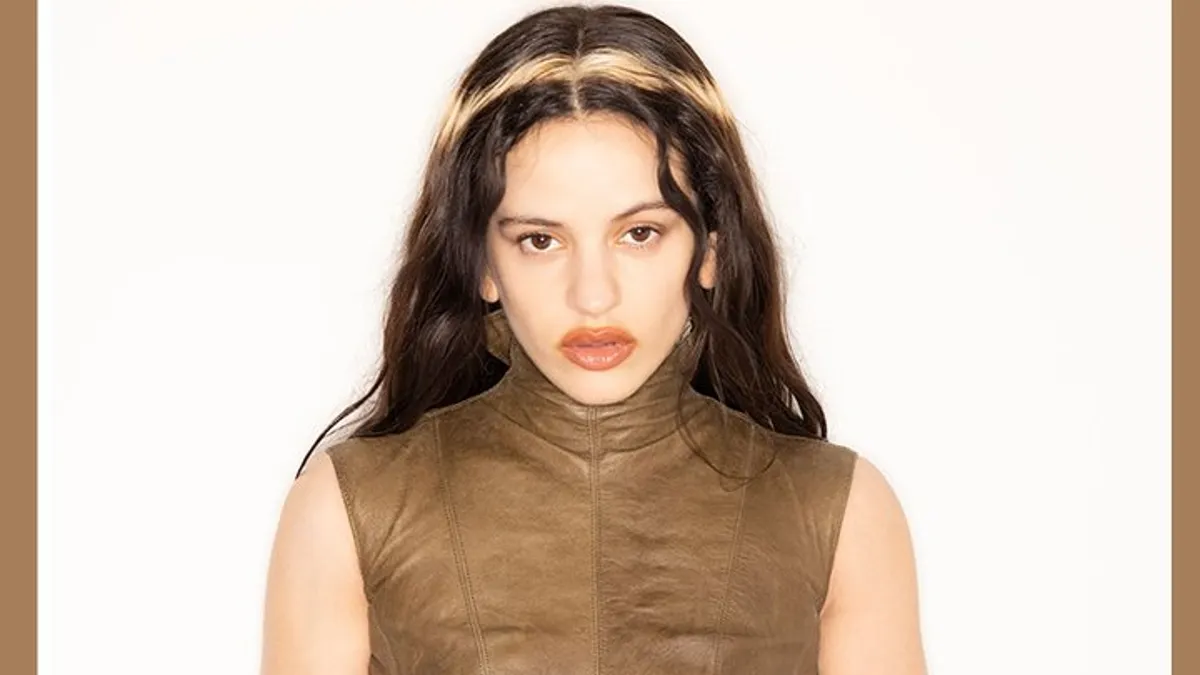
I nearly chose Rosalia’s Motomami as album of the month back in 2022. I think I correctly determined that the rest of the pod would hate it. It was chaotic, digital, and brilliantly abrasive. But it also leant very heavily into Reggaeton that I knew would wind at least 2 of the brothers up. That album won 4 Latin Grammy awards as well as the Grammy for best Latin Alternative album. Where do you go after that?
Apparently, you go towards the light (‘Lux’ is latin for light and clearly references luxury too).
This month’s choice is LUX, the fourth studio album from Rosalia, and it’s a lot. If MOTOMAMI was an album following an adrenaline-fueled night out in a neon-drenched city, LUX is the spiritual, orchestral comedown at dawn. It’s a MASSIVE, operatic, orchestral, experimental, entrancing, exciting, overwhelming experience, presented in 4 movements like a classical symphony.
Concepts and Themes.
At its core, LUX is a deep dive into the history of female mysticism. Rosalía has traded the streetwear imagery of Motomami for the iconography of female saints and spiritual pioneers. The album explores the idea of transformation she uses the stories of medieval mystics and uses these historical figures as mirrors for her own experience with fame and womanhood. This record is obsessed with transcendence, reaching for a state of peace or grace beyond the noise of the modern world.
Architecture of Lux’s Sound.
Rosalía is firmly in the driver’s seat as executive producer (handling ‘97%’ of the production herself … not sure how you determine a single % of production input but I’m here all day for random stats). However, the sonic world of LUX was built alongside a carefully selected team of collaborators.
Noah Goldstein: Rosalía’s long-term collaborator and the man who helped engineer the maximalist textures of Kanye West’s My Beautiful Dark Twisted Fantasy and the sparse brilliance of Frank Ocean’s Blonde. He knows exactly how to handle her more experimental impulses, having been a key architect on MOTOMAMI and Travis Scott’s Utopia.
Dylan Wiggins: Bringing the rich, multi-instrumental depth that anchors the album’s four movements. You’ve heard his touch on SZA’s SOS, The Weeknd’s Starboy, and Daniel Caesar’s Never Enough. He provides the soulful, organic counterpoint to the album’s grander symphonic moments.
David Rodríguez: Her right-hand man for vocal production. He’s the reason every one of those 13 languages she sings in hits with total precision. Beyond his work on the MOTOMAMI era, David (often known as Godriguez) has a deep history in global sounds, famously producing Sampa the Great’s breakthrough The Great Mixtape.
It’s also worth noting the absence of El Guincho, Rosalia’s long time creative partner, which reminds me of Little Simz’ recent creative journey? Notable is the inclusion of Caroline Shaw (the Pulitzer-winning composer who has worked with everyone from Kanye to the Attacca Quartet) and conductor Daníel Bjarnason. These are two heavyweight collaborators that represent and add to the scale of this work.
First Impressions.
I’ve only been living with this for a few weeks and my notes are a bit of a mess. I am finsding that I don’t often have the words to describe what I am hearing or feeling.
“Porcelana”: Inspired by the Japanese monk Ryōnen Gensō, who famously scarred her own face to pursue her spiritual path. It’s a haunting track where Rosalía sings partly in Japanese over a backdrop of Bernard Herrmann-esque string stabs and heavy flamenco claps.
“La Perla”: This one is going to spark a lot of debate on the pod. Musically, it’s a light, airy waltz with a dramatic swell of brass—but the lyrics are an absolute evisceration of a “world-class fuck up” ex-lover. It’s “the anti-ballad,” hiding venom inside a gorgeous, shimmering shell.
“La Yugular”: Drawing on the Sufi mysticism of Rabia Al-Adawiyya, this track explores the proximity of the divine. It features a surreal nesting-doll lyric about an army fitting in a golf ball, ending with a spoken-word fragment from Patti Smith.
“Berghain”: (Featuring Björk and Yves Tumor) is a total head-fuck in the best way possible—a club track that feels like it’s being performed in a cathedral.
The Anti-Dopamine Manifesto.
Crucially, Rosalía has been very vocal about how she wants us to consume this record. In a direct response to the “commoditisation of the hook”—where 15-second snippets are engineered specifically for social media virality — she has described LUX as an anti-dopamine hit.
She isn’t interested in making background music for your morning commute or soundtracking a scroll through your feed. Her advice? Sit in a darkened room with the lyrics and their translations in front of you. This is not “easy listening,” and it wasn’t intended to be. It’s an album that demands total, undistracted attention. It’s a challenge to the modern listener to slow down and sit with the discomfort of silence and the weight of an orchestra.
Whether she’s successfully fought back against the TikTok-ification of music or simply created something beautifully inaccessible is exactly what we’re going to get into in the podcast.